
If you have a toddler, you probably know the sweet—and slightly exhausting—magic of the “I do it!” phase. One minute your two-year-old is begging to pour the dog’s kibble (mostly onto the kitchen floor), and ten minutes later they are flat on the rug refusing to put a single wooden block back into the bin.
Most parents whisper the exact same thought to themselves around 5:30 PM: “It takes me 30 seconds to just pick this up myself. Why bother trying a toddler chore chart right now?”
You are not impatient for thinking that—you are human! Helping alongside a toddler really is slower at first. But when you introduce chores gently between ages 2 and 4, the goal is not saving you time today. The goal is planting a joyful, lifelong identity: “I am a capable helper in my family.”
Why Most Toddler Chore Charts Fail in Week One
Before we tape anything to the fridge, let’s look at why traditional chore charts usually fizzle out with 2- to 4-year-olds:
- Too many boxes and words: A 7-row grid covered in tiny text means nothing to a child who cannot read yet—and feels overwhelming to a busy parent.
- Waiting until Friday for rewards: Toddler brains live entirely in the now. Promising a Saturday trip to the park for Tuesday’s clean-up won’t register.
- Correcting their “imperfect” work: If a 3-year-old proudly pulls up their quilt crooked and we immediately smooth it out in front of them, their brain hears: “I didn’t do it right.”
5 Gentle Steps to Introduce Chores to Your Toddler
Step 1: Pick Just 1 or 2 “Anchor” Habits First
Skip the full-day list. Choose one moment that already happens every day—like tossing pajamas into the laundry basket after getting dressed, or putting their bowl on the low counter after snack time. When one habit feels natural after a week or two, add a second.
Step 2: Build a Picture-First Toddler Chore Chart
Toddlers are visual thinkers. Whether you use magnets on the fridge, a printed illustrated chart, or kid-friendly icons in an app, your toddler needs to see the task at a glance—a picture of shoes by a mat, a toothbrush, or a toy bin. Placing the chart at their eye level turns you from the nagging boss into their teammate.
Step 3: Move From “I Do” → “We Do” → “You Do”
Never shout a chore from across the kitchen and expect a 3-year-old to execute it solo. For the first few weeks, do it side-by-side: “Let’s race our blocks into the basket together!” As they master the motion, slowly step back and let them take the lead while you cheer nearby.
Step 4: Shrinking Big Messes Into Concrete Micro-Missions
Saying “clean up the playroom” freezes even a 6-year-old—for a toddler, it feels like climbing Mount Everest. Break it into bite-sized games: “Can you find all the yellow Duplos while I grab the books?” Need more playful clean-up ideas? Check out our 5-minute toy cleanup games.
Step 5: Celebrate Effort Immediately (and Fix Things Later!)
Toddlers thrive on your warm reaction in the moment. Use specific process praise: “You carried your cup all the way to the sink with two steady hands!” Let them put a sticker or tap a star right away—and if the shirt landed half-inside-out in the drawer, quietly straighten it after bedtime.
Realistic Toddler Chores by Age (Ages 2 to 4)
Every child develops at their own rhythm, so treat this toddler chore list like a cozy menu—not a rigid test.
The “Copycat Shadow” Stage
At two, your child wants to touch everything you touch. Channel that imitation instinct into quick, 30-second wins right next to you:
- Toss pajamas or dirty socks into the hamper (hamper basketball!)
- Drop plush toys into a soft floor basket
- Wipe small water spills with a dry hand towel
- Hand you diapers, wipes, or napkins while you prep
- Place board books back on a low shelf
The “All By Myself!” Explorer Stage
Three-year-olds crave autonomy and love clear boundaries. A visual toddler chore chart with 2 or 3 picture cards works like magic here:
- Line up shoes on the entryway mat
- Carry their plastic plate and cup to the kitchen counter or low sink bin
- Help sort laundry (putting all the big towels or socks into one pile)
- Water indoor plants using a small measuring cup
- Put library books in the book basket before bedtime
The “Big Kid Helper” Stage
By four, kids can follow a two-step visual quest and feel genuinely proud contributing to the whole family:
- Pull up their bed blanket and place their pillow at the top
- Set napkins and spoons on the dinner table
- Feed the family pet a pre-measured scoop of food
- Match clean socks into pairs on the couch
- Hang their preschool backpack and jacket on a low hook
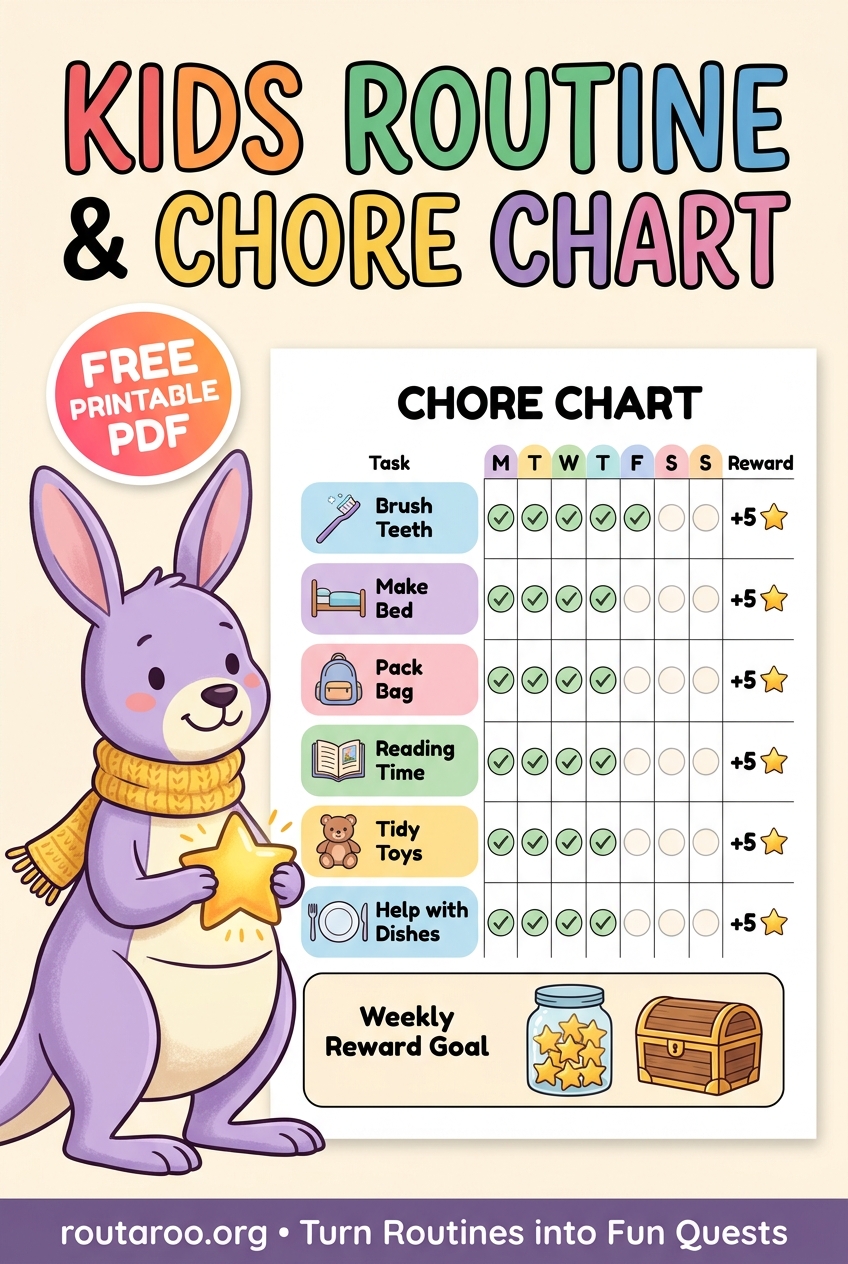
Start Today With a Free Printable Chore Chart
Grab our free 7-Day Illustrated Chore & Routine Chart! Print a copy for your fridge, let your toddler pick 2 tiny daily quests, and celebrate each completed day with stickers or checkmarks.
Download Free Printable Chore Chart (PDF) ↗ 100% Free • Works for A4 & US LetterCalm Mom Scripts for When Your Toddler Says “NO!”
Even with the sweetest toddler chore chart in the world, tired toddlers will still push back. Keep these low-drama pivots in your back pocket:
Why it works: Playful co-regulation melts overwhelm much faster than threats a toddler brain can’t process yet.
Why it works: Protects their fragile helper confidence while teaching that cleanup is a normal, calm part of trying.
Why it works: Shifts authority onto the neutral visual chart and gives them something small to look forward to right away.
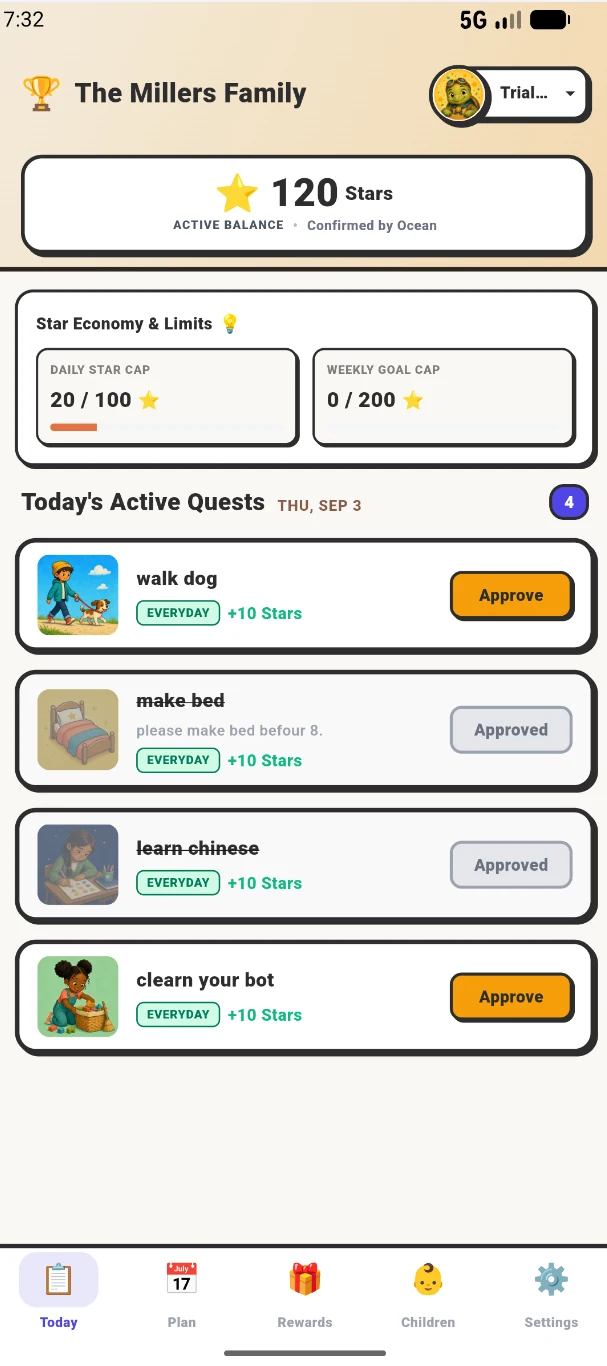
Turn Toddler Habits Into Gentle Daily Quests
Frequently Asked Questions About Toddler Chore Charts
At what age should I start a toddler chore chart?
You can introduce simple “helping alongside you” habits as early as 18 to 24 months, and start a simple picture-based toddler chore chart around age 2.5 to 3. Keep it to 1 or 2 visual tasks a day so it feels like a fun game rather than a demanding checklist.
How many chores should a 2- to 4-year-old have each day?
For 2-year-olds, 1 tiny daily habit (like tossing pajamas into the hamper) is plenty. For 3- and 4-year-olds, 2 to 3 visual steps tied to natural transitions—like clearing their plastic bowl after breakfast and putting shoes on the mat—build confidence without overwhelming their attention span.
What if my toddler refuses to help or dumps the toys back out?
Stay calm and shrink the task. Toddlers often refuse when they are overtired or overwhelmed by a big mess. Switch to playful connection (“Let’s rescue just the blue blocks together!”) or offer a simple two-choice prompt (“Do you want to carry the teddy bear or the red truck to the basket?”).
Should toddlers get stickers, stars, or an allowance for chores?
Toddlers respond best to immediate, warm celebration—your smile, a high-five, or placing a sticker or star on their visual chart right away. Skip cash allowances for ages 2 to 4; instead, connect completed habits to shared family moments like choosing tonight’s bedtime story.
Explore More Peaceful Parenting Guides
- Age-Appropriate Chores for Kids: The Realistic Mom's Guide (Ages 2 to 12)
- Free Printable 7-Day Visual Chore Chart (PDF)
- How to Get Kids to Clean Up Toys Without Screaming (Fun 5-Minute Games)
- Star Reward Chart for Kids: How to Motivate Cooperation Without Bribes
- Positive Reinforcement for Kids: What to Say Instead of “Good Job!”
- Bedtime Routine Checklist for Kids: End the 100 Stalling Excuses
- How to Stop Morning Routine Battles with Kids (Without Yelling)